Autonomous Charging & Docking Factory
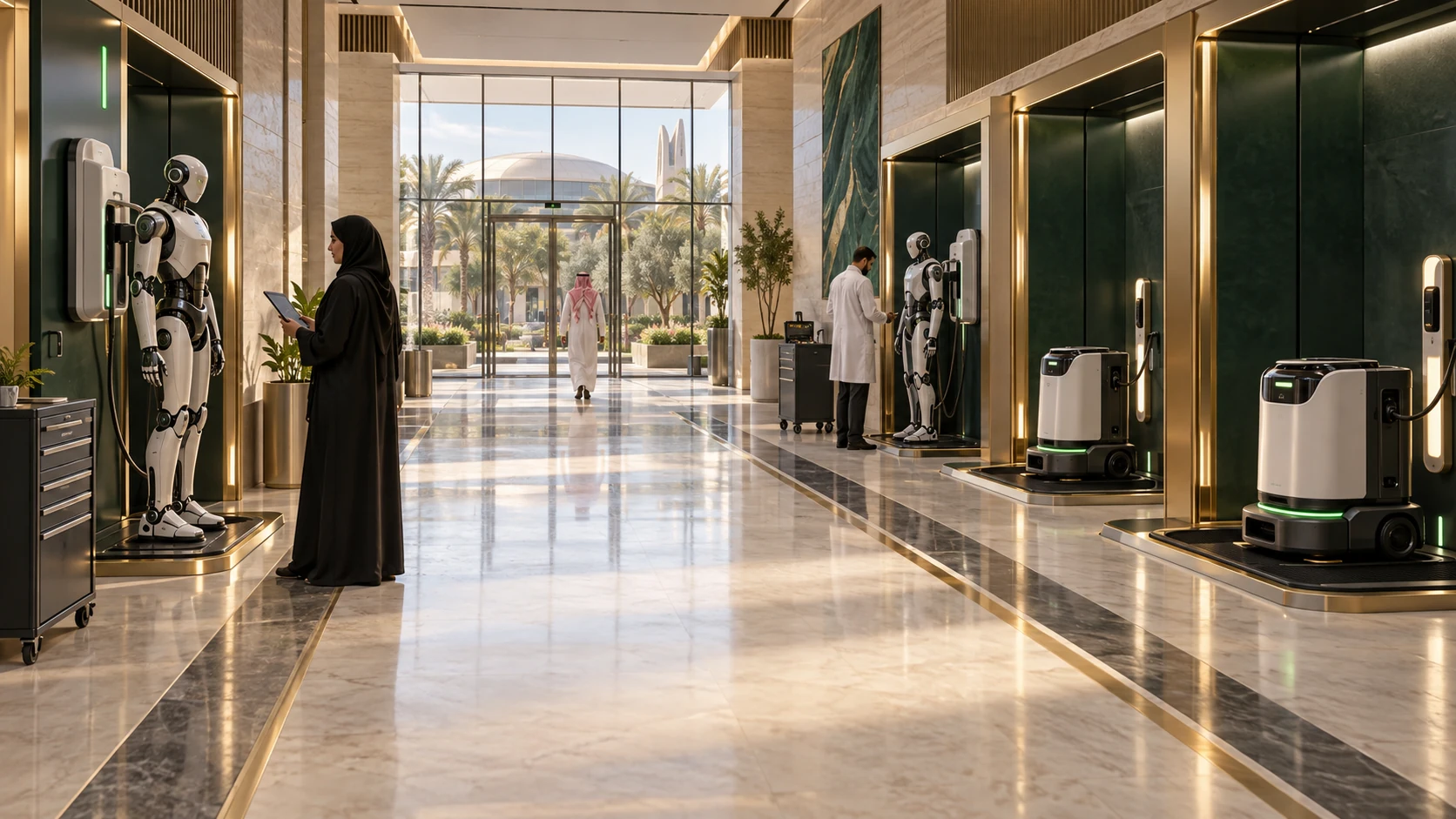
Develop and manufacture power and docking stations connected with inspection, updates and fleet management.
View facilities & explanationsInside the space,
the details take shape.
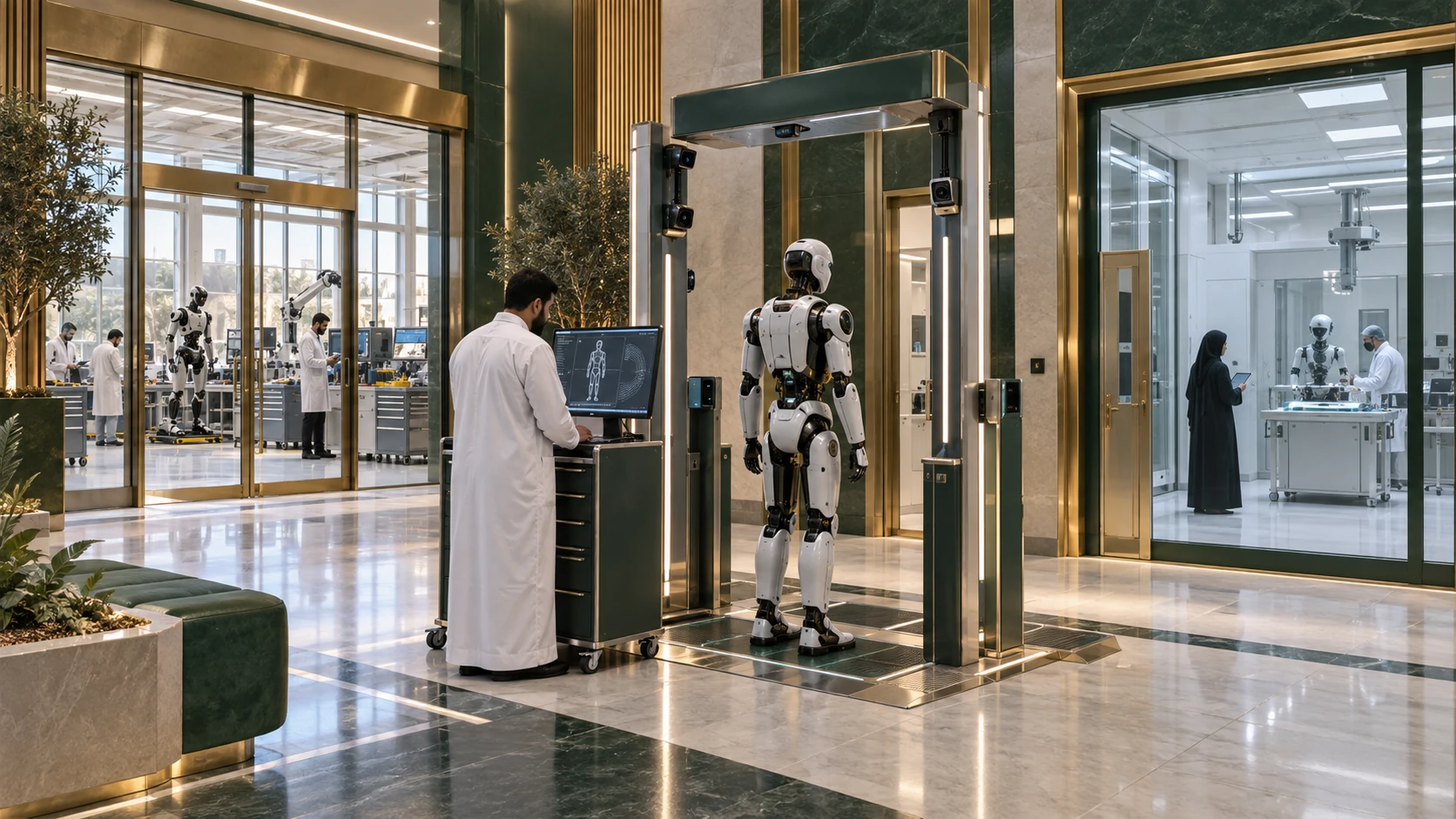
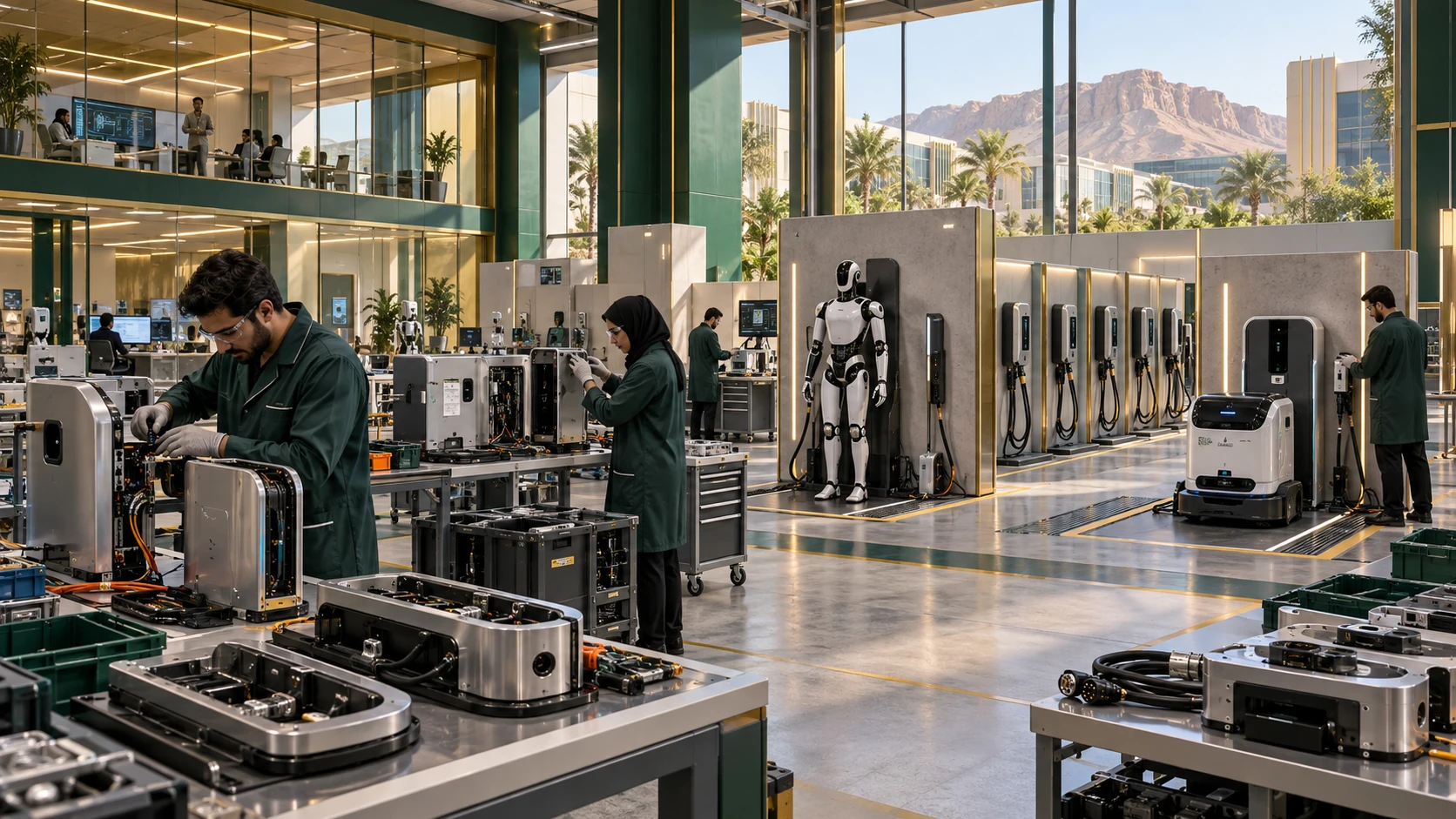
Stations are assembled on production benches then tested with intended robot classes in separate docking cells. Power and data are treated as distinct design and documentation functions. Universal charger compatibility is not assumed; each configuration has its own compatibility record.
A clear service route and defined work areas
Access separated by the function of each space
Review and documentation points between work stages
Every unit, explained.
Every facility is explained below. Use the index to jump directly to a facility.
Docking mechanics
Design contact, guidance, retention and movement limits for each robot class.
Dock design and physical-compatibility record.
Power & interface protection
Define power, communication and verification functions before permitting data or maintenance access.
Function specification and power/data separation record.
Assembly & compatibility testing
Review docking, charging, release and events with each supported class before approval.
A station with documented tests and intended use.
From intake to outcome.
An illustrative route linking the units and showing how work moves between them.
Define robot class
Define robot, battery and interface.
- 01
Define robot class
Define robot, battery and interface.
- 02
Design station
Define docking, power and verification.
- 03
Assemble & test
Test compatibility and scenarios.
- 04
Integrate with fleet
Connect the station with scheduling and records.
Autonomous Charging & Docking Factory
The image proposes a relationship between work areas, circulation and service. Zones and materials can evolve; it does not establish engineering dimensions or approved final equipment.
How does the concept work in practice?
Station for a service-robot class
The class interface is reviewed and docking, release and recording are tested before registering the station as compatible.
Defined compatibility rather than universal support claims.
Clear ownership. Documented outputs.
System owner
Defines scope, authorized parties and case progression.
Specialist & integration team
Performs specialist work and connects outputs to related facilities.
Quality & review
Reviews records and exceptions before closure.
What does this area deliver?
01Charging and docking stations
02Compatibility and test records
03Integration and scheduling records
What is reviewed before operation?
01Separate power from data-access authority
02Document robot/station compatibility
03Test docking and release procedures
Proposed review areas, not a readiness certificate or operating approval.Connected to the wider city.
Continue into the detailed pages of related facilities and systems.