Camel herd management
Identity, tracking, counting, water and feed monitoring, and alerts over a local network.
View facilities & explanationsInside the space,
the details take shape.
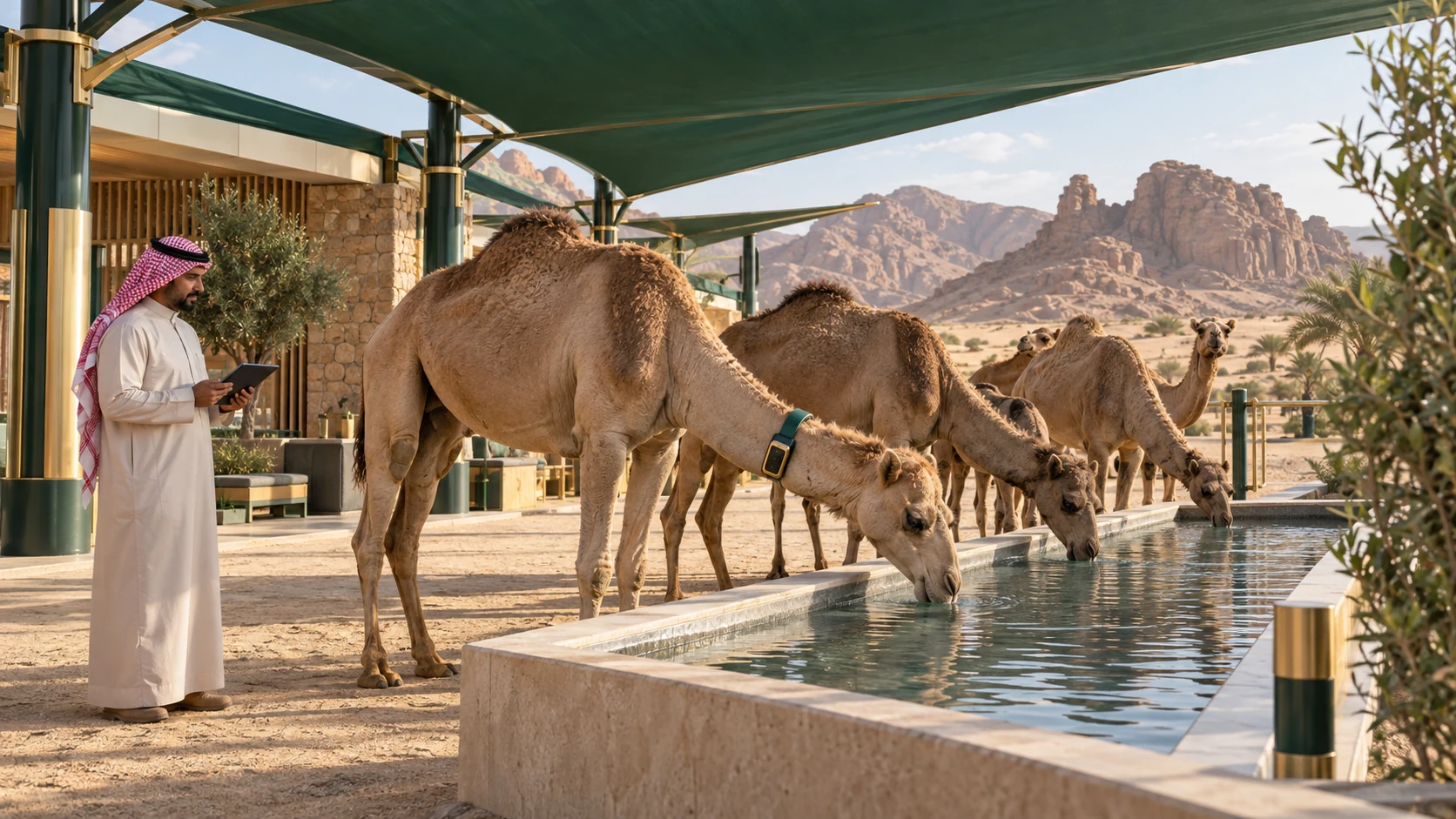
A herd-management station combines local monitoring with caretakers’ experience. The design proposes shade, water points and clear entry routes, with individual identification, observation points and a small operations room. Information supports counts, location, water and feed, linking every alert to a field check.
Shade and routes supporting herd movement and care
Sensors and equipment evaluated for the environment and animals
A local operations room near service points
Every unit, explained.
Every facility is explained below. Use the index to jump directly to a facility.
Herd & individual identity
Link identifiers with animal and group records and document fitting and review by caretakers.
An updatable individual and group register.
Counting & location
Collect identity and location readings and compare with records, distinguishing missing data from a missing animal.
A reconciliation list and cases needing verification.
Water & feed observation
Show service-point indicators, schedule inspection and record replenishment or faults.
A water-point and feeding service log.
Alerts & local network
Record and route alerts to owners while maintaining local access to available data within system capabilities.
An alert linked to review and outcome.
From intake to outcome.
An illustrative route linking the units and showing how work moves between them.
Register
Register animals, groups and service points.
- 01
Register
Register animals, groups and service points.
- 02
Observe
Collect available time-stamped readings.
- 03
Compare
Review count, movement and service-point status.
- 04
Field check
A caretaker checks the condition before accepting an alert interpretation.
- 05
Close & review
Record action and refine alert thresholds.
Camel herd management
The image proposes a relationship between work areas, circulation and service. Zones and materials can evolve; it does not establish engineering dimensions or approved final equipment.
How does the concept work in practice?
Low reading at a water point
A reading needs review. A caretaker inspects the water level and sensor, then records replenishment, maintenance or an inaccurate reading.
An alert translated into documented field action.
Clear ownership. Documented outputs.
System owner
Defines scope, authorized parties and case progression.
Specialist & integration team
Performs specialist work and connects outputs to related facilities.
Quality & review
Reviews records and exceptions before closure.
What does this area deliver?
01Herd and identity register
02Readings, alerts and review log
03Water and feed service plan
What is reviewed before operation?
01Distinguish missing data from actual absence
02Equipment suitability for conditions and animal care
03Assign each alert an owner
Proposed review areas, not a readiness certificate or operating approval.Connected to the wider city.
Continue into the detailed pages of related facilities and systems.