Robotics hospital
A documented cycle of intake, diagnosis, repair, isolation, testing and rehabilitation.
View facilities & explanationsInside the space,
the details take shape.
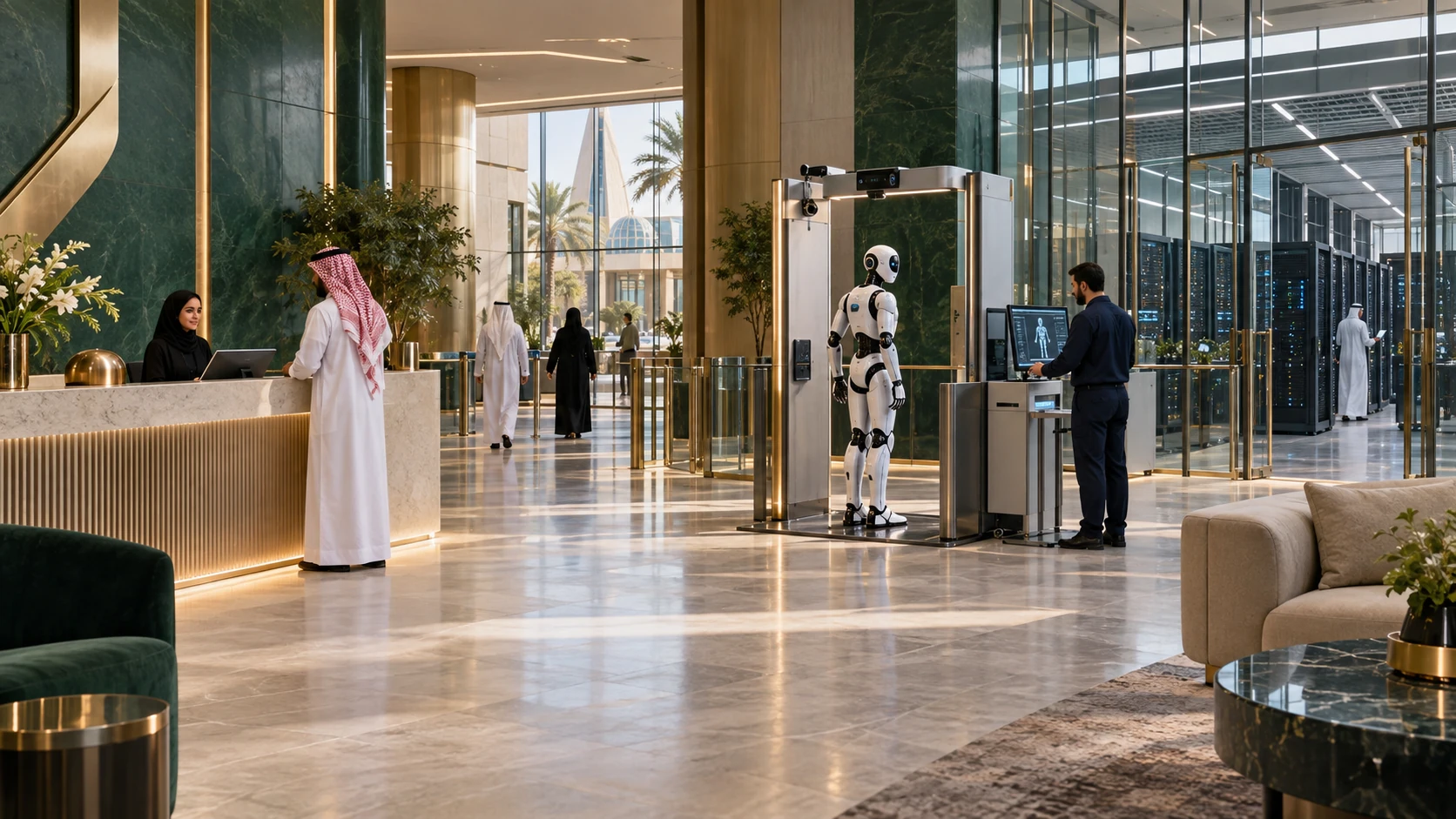
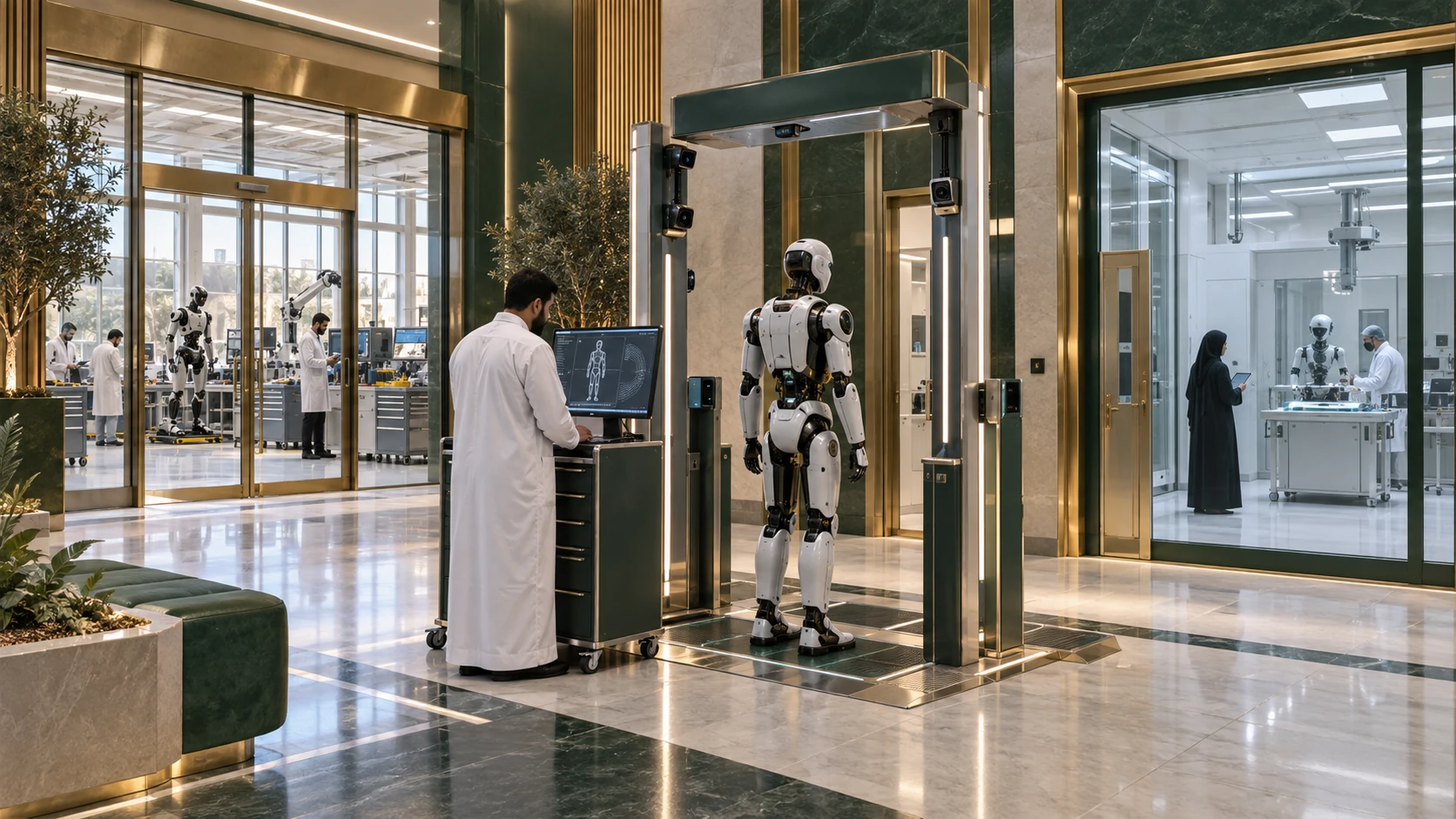
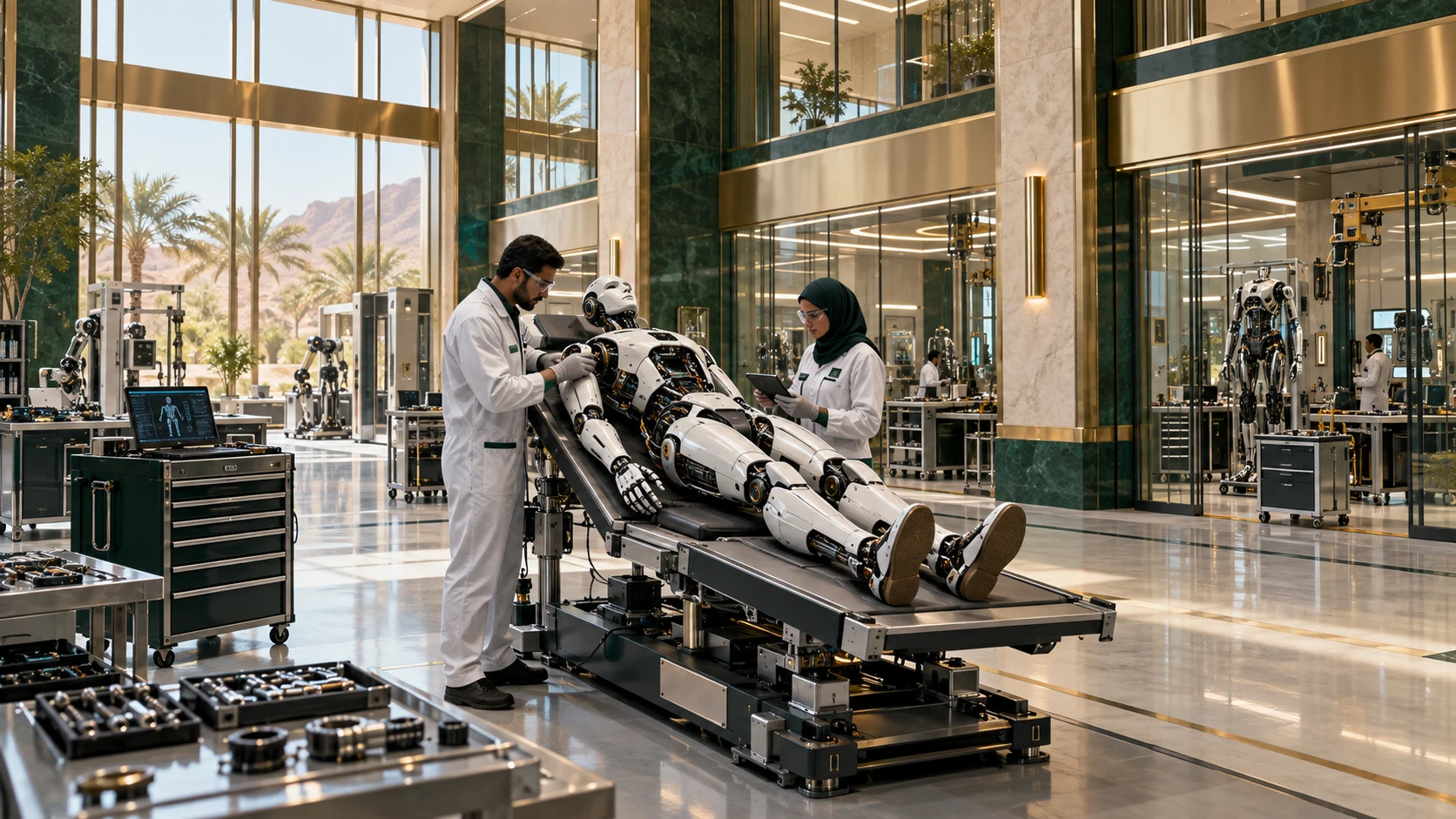
This family unifies engineering-hospital services into a documented cycle: robot intake, diagnosis, technical or security routing, repair and testing. The spatial concept illustrates movement between units, while the innovation focuses on consistent records and decisions throughout the cycle.
Light reception stone with emerald and champagne accents
Observation glazing separating public and technical areas
Adjustable service stations and clear handling lanes
Every unit, explained.
Every facility is explained below. Use the index to jump directly to a facility.
Intake & initial diagnosis
Create a case record before intervention, linking the robot to its owner, identity and reported fault.
What happens here?
Record the fault, accessories and intake condition
Review identity and maintenance history
Route the case to technical or security handling
Intake record, initial classification and assigned case owner.
Emergency & intensive engineering care
Handle sudden failures and complex damage that prevent routine servicing.
What happens here?
Assess condition and suitable handling
Coordinate mechanical, electronic and software teams
Preserve condition and logs before component changes
A documented intervention plan and service priority.
Mechanical maintenance
Inspect and service structure, joints, transmission and worn components within the product specification.
What happens here?
Inspect clearance, fastening and movement
Repair or replace appropriate components
Record parts and adjustments before testing
Mechanical repair record and replacement-parts list.
Electronics & sensing
Trace faults in power, boards, sensors and internal connections.
What happens here?
Dedicated diagnostic station checks
Compare sensor readings with the product baseline
Reassemble and calibrate after replacement
Inspection results, traceable components and reviewable calibration.
Software, systems & reprogramming
Resolve software faults while preserving version and configuration history and separating case data from the operating image.
What happens here?
Read fault logs and compare configuration
Apply an authorized version and recovery plan
Test tasks after the update
Version and change record with task verification results.
Security inspection & cyber quarantine
A separate path for suspected compromise, coordinated with identity and cyber-resilience teams.
What happens here?
Preserve evidence and chain of custody
Analyze in an environment separated from operations
Reverify before restoring permissions
Incident report and treatment or continued-quarantine decision.
Technical cleaning & parts bank
Prepare robots and parts for servicing, with records of provenance, compatibility and inventory movement.
What happens here?
Component-appropriate cleaning
Prepare replacement parts against a work order
Record issue, return and excluded parts
Preparation checklist and case-linked parts record.
Testing & return to readiness
Combine repair results into integrated functional testing before handover or redeployment.
What happens here?
Retest the defined use tasks
Review the original fault and effects of changes
Update identity records and recommendations
Readiness and handover report with any remaining limitations.
From intake to outcome.
An illustrative route linking the units and showing how work moves between them.
Documented intake
Record identity, fault, accessories and observed condition.
- 01
Documented intake
Record identity, fault, accessories and observed condition.
- 02
Trust gateway
Review identity and events before maintenance or quarantine routing.
- 03
Treatment plan
Define required tests, parts and specialist teams.
- 04
Repair & documentation
Record each component and software change.
- 05
Integrated testing
Repeat use tasks and review results.
- 06
Handover & follow-up
Update records and establish follow-up before redeployment.
Robotics hospital
The image proposes a relationship between work areas, circulation and service. Zones and materials can evolve; it does not establish engineering dimensions or approved final equipment.
How does the concept work in practice?
Reception robot stops during movement
The robot arrives with a fault description and logs. Teams compare sensor, joint and software behavior, perform the relevant repair and repeat the same reception route.
Return with documented cause, changes and test results.
Suspected unverified access
An unusual access event routes the robot to quarantine rather than the general workshop. Specialists review evidence and identity status before deciding on recovery.
A distinct incident pathway and documented readmission decision.
Clear ownership. Documented outputs.
Case coordinator
Owns intake, priority, communications and handover.
Specialist engineers
Mechanical, electronic and software engineers share a single case plan.
Incident & testing team
Reviews security cases and evidence for return to service.
What does this area deliver?
01Case record and chain of custody
02Diagnostic and repair reports
03Parts and software-version history
04Testing and readiness report
What is reviewed before operation?
01Complete traceability from intake to handover
02Separation of quarantine from ordinary maintenance
03Repeat testing related to the original fault
04Identity and permissions updated to reflect the outcome
Proposed review areas, not a readiness certificate or operating approval.Connected to the wider city.
Continue into the detailed pages of related facilities and systems.